Yes, a child can be taller than both parents. While genetics determine approximately 80% of height, the inheritance pattern is polygenic, meaning it involves hundreds of different genes interacting together. Furthermore, improved nutrition and health standards allow modern generations to reach a genetic "maximum" that their parents may have missed due to environmental factors.
Table of Contents
The "Secular Trend": Why Generations Are Getting Taller
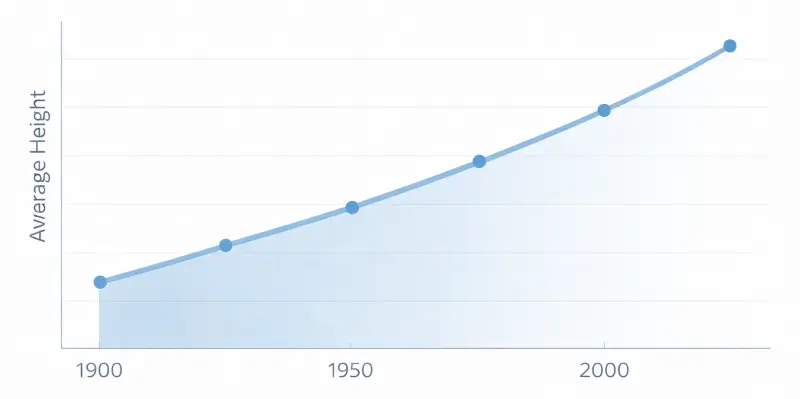
The "Secular Trend" shows that improved living standards allow each generation to grow taller than the last.
Historical data indicates a phenomenon known as the secular trend in height, where average adult heights increase with each successive generation.
- The Cause: This is primarily driven by better access to protein-rich nutrition, clean water, and vaccines during childhood compared to previous decades.
- The Result: Children today often maximize their genetic potential, whereas their parents might have had their growth stunted by illness or poor diet 30 years ago.
- Data Example: Growth data from the Netherlands and Germany shows that average heights have steadily risen over the last century, confirming that populations get taller as living standards rise.
The Science of Height Genetics (Polygenic Inheritance)
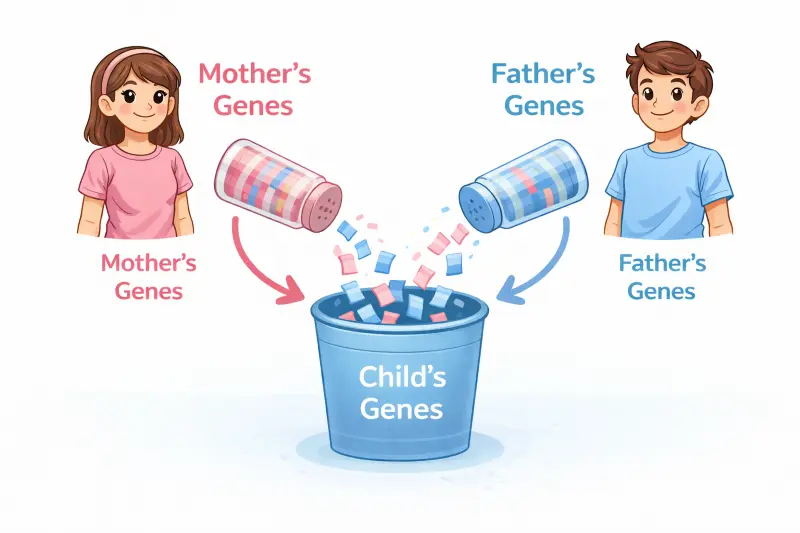
Height is a polygenic trait, meaning it comes from a complex mix of hundreds of gene variants, not just one.
Height is not determined by a single "tall" or "short" gene. The polygenic inheritance model defines height as a complex trait controlled by over 700 distinct genetic variants.
How Polygenic Traits Work
A child does not simply receive a direct copy of their parents' height.
- The Lottery: Each parent carries a mix of "tall" and "short" alleles (gene variants).
- The Combination: A child might inherit the "tall" variants from both the mother and the father, resulting in a height that exceeds both parents.
- The Variance: Conversely, two tall parents can pass on their hidden "short" variants, resulting in a child shorter than expected.
Recessive Tall Genes and Skipping Generations
Genetic traits can remain dormant or "recessive" for years.
- Skipping Generations: A "tall gene" from a grandparent or great-grandparent may not manifest in the parents but can reappear in the child.
- Expression: If both parents carry these recessive tall genes without expressing them (phenotype), their child may inherit the active combination and grow significantly taller.
Understanding "Regression to the Mean"
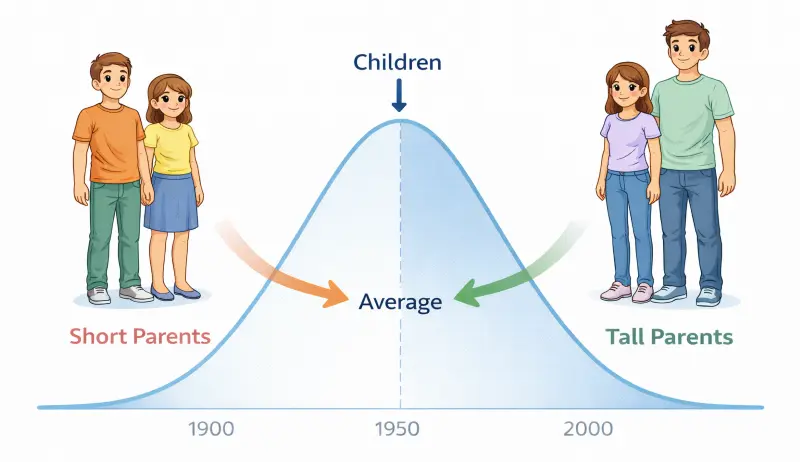
"Regression to the Mean" explains why very tall parents often have slightly shorter children, and vice versa.
This statistical concept explains why height often normalizes over generations.
- Tall Parents: Parents who are exceptionally tall often have children who are tall, but slightly shorter than themselves (moving back toward the average).
- Short Parents: Parents who are exceptionally short often have children who are short, but slightly taller than themselves.
- The Effect: This ensures the human population maintains a stable average height rather than splitting into "giants" and "dwarfs."
Genetic Height Potential vs. Actual Height (The Environment Gap)
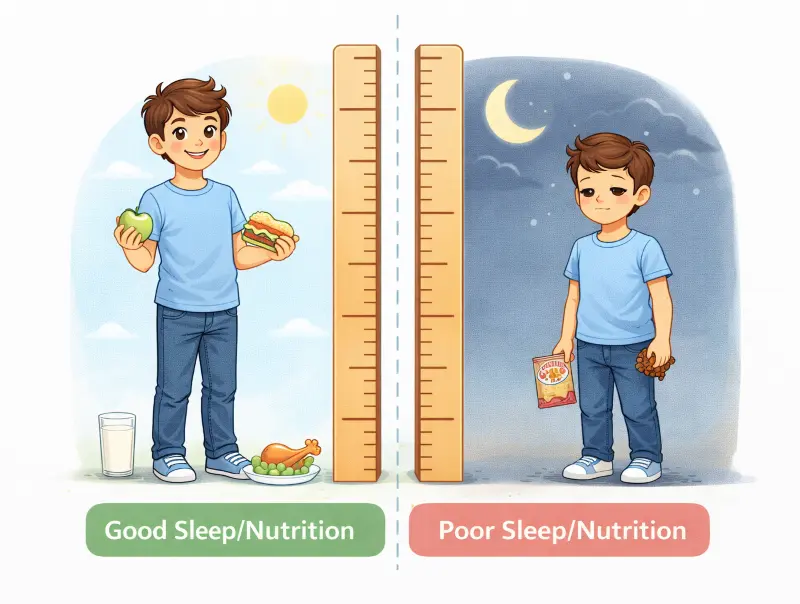
Genetics set the maximum potential, but nutrition and sleep determine if a child reaches that height.
Genetics provide the potential range (e.g., 5'8" to 6'0"), but the environment determines where the child falls within that range.
Nutrition and Early Development
Proper nutrition during the first 1,000 days of life is a primary driver of linear growth.
- Protein Intake: Sufficient protein is required for the elongation of long bones.
- Micronutrients: Zinc, Vitamin D, and Calcium deficiencies are linked to stunted growth.
- Caloric Deficit: Chronic under-eating during puberty can permanently lower an adult's final height.
The Impact of Sleep and Hormones
Human Growth Hormone (HGH) is released in pulses, primarily during deep, slow-wave sleep.
- Timing: The majority of HGH secretion occurs shortly after falling asleep.
- Disruption: Chronic sleep deprivation in adolescents can suppress HGH levels, potentially preventing them from reaching their full genetic height.
Comparison: Genetic Probability by Scenario
The following table outlines the statistical likelihood of height outcomes based on parental stature.
Probability of Exceeding Parental Height
| Parental Stature | Child's Likely Outcome | Key Factor |
|---|---|---|
| Both Parents Short | Taller than Parents | "Regression to the Mean" pushes the child toward the average. |
| Both Parents Average | Similar to Parents | Genetics are stable; outcomes vary by nutrition. |
| Both Parents Tall | Shorter than Parents | Extreme genetics often regress back toward the mean. |
| One Tall, One Short | Average of Both | The child typically lands between the two heights. |
Calculation: Predicting Height Range
Pediatricians use specific formulas to estimate the genetic target.
The Mid-Parental Height Formula (Reference)
This calculation provides the baseline genetic potential. This is why doctors use the Mid-Parental Height Formula to establish a baseline for expected growth.
- For Boys: (Mother's Height + Father's Height + 5 inches) ÷ 2
- For Girls: (Mother's Height + Father's Height - 5 inches) ÷ 2
Note: The final adult height can vary by ±2 to 4 inches (5-10 cm) from this calculation depending on environmental factors like nutrition and health.
Real-World Scenarios (Case Studies)
Anecdotal reports from growth studies and forums illustrate how variability occurs.
Case A: The "Tall" Outlier (The 6'5" Son)
Scenario: A father is 5'5" (165 cm) and the mother is 5'2" (158 cm). Their son grows to be 6'5" (195 cm).
Explanation: This rare outcome suggests the presence of recessive tall genes from grandparents that skipped the parents. It also indicates the son likely had optimal nutrition and health compared to the parents. For example, the average height for girls has increased significantly over the last 30 years due to improved living conditions.
Case B: The "Short" Outlier
Scenario: Two tall parents (6'0" and 5'9") have a son who stops growing at 5'8".
Explanation: This can occur due to Constitutional Growth Delay (late bloomer), nutritional deficits, or inheriting the specific "short" gene variants that both tall parents carried but did not express.
Frequently Asked Questions
Can two short parents have a tall child?
Yes. If both parents carry recessive "tall" genes from their ancestors, they can pass these traits to their child. Additionally, if the parents' growth was stunted due to poor nutrition, the child may reach the family's true genetic potential, appearing much taller. Learn more about calculating your child's genetic potential in our detailed guide.
Will a son always be taller than his father?
No. While males are generally taller than females, a son is not guaranteed to exceed his father's height. If the mother is short, her genetics will pull the son's predicted height down. "Regression to the mean" also affects sons of very tall fathers.
Does height skip a generation?
Yes, in terms of expression. Height is polygenic, not simple Mendelian genetics. However, specific height-influencing alleles can be passed down silently through a "short" parent and manifest in the next generation, making it appear as though the trait skipped a generation.
Why am I shorter than my parents?
Environmental factors or genetics are the cause. You may be shorter if you experienced malnutrition, chronic illness, or severe stress during puberty. Genetically, you may have inherited the "short" variants from both parents, even if they are tall.
Can you grow taller than your genetic potential?
No. "Genetic potential" defines the maximum biological limit a skeleton can reach. You cannot exceed this limit. However, most people do not reach their full potential due to lifestyle factors, so improving health can help you reach the max, but not exceed it. To see a prediction based on your child's current weight and age, use our advanced Child Height Calculator.
Is height inherited from the mother or father?
Both parents contribute equally. Research indicates that height inheritance is roughly 50/50. However, some specific growth genes (like those related to IGF-1 levels) may have stronger imprinting from the father, while maternal nutrition during pregnancy affects the starting point.
Does swimming or yoga make you taller than genetics?
No. Exercise like swimming improves posture and decompresses the spine, which may make you appear taller or maximize your current height. However, no exercise can alter your DNA or extend bone length beyond your genetic cap.
Medical Disclaimer
This content is for informational purposes only and does not constitute medical advice. The calculations and explanations provided are statistical estimations based on biological standards. If you have concerns about a child's growth velocity, short stature, or delayed puberty, consult a pediatric endocrinologist for a comprehensive evaluation.